

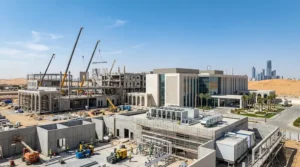

What Is EPC Contracting and Why It Matters for Large-Scale Projects in Saudi Arabia
EPC contracting Saudi Arabia is reshaping how the Kingdom builds its future. From billion-dollar oil and gas plants to solar farms and smart cities, the EPC model is the driving force behind Vision 2030’s most ambitious projects. But what exactly is EPC contracting? How is it different from design-build or design-bid-build? And why do project owners in Saudi Arabia prefer it? This article answers all of those questions clearly and simply.
What Does EPC Stand For?
EPC stands for Engineering, Procurement, and Construction. It is a project delivery model. One single contractor handles all three phases of a project. The contractor designs the project, buys all needed materials and equipment, and then builds it from start to finish. This is why EPC is often called a turnkey solution. When the job is done, the owner simply turns the key and starts operations.
Engineering procurement construction Saudi projects rely on this model heavily. It puts everything under one roof. The client does not manage multiple vendors or separate teams. Instead, one firm — the EPC contractor — carries full responsibility for the project outcome.
How the EPC Model Works Step by Step
Phase 1 — Engineering
This is where planning and design happen. The EPC contractor KSA team studies the site. They review client requirements and create detailed technical drawings. They also run feasibility studies and comply with Saudi regulations. Good engineering at this stage prevents costly errors later.
Phase 2 — Procurement
Once designs are approved, procurement begins. The engineering procurement construction Saudi team sources all materials, equipment, and systems. They manage suppliers and logistics. Getting procurement right keeps costs under control and schedules on track.
Phase 3 — Construction
The physical building phase begins. The EPC contractor KSA team mobilizes workers and equipment on site. They handle civil, structural, mechanical, and electrical work. After construction, they also do commissioning and testing. Then they hand over a fully ready facility to the client.
EPC contract management ties all three phases together. It ensures that engineering decisions support procurement plans. And procurement timelines align with construction schedules. This integration is what makes EPC contracting Saudi Arabia so powerful for large and complex projects.
EPC Contracting Saudi Arabia — Why It Is the Dominant Model
Saudi Arabia is one of the world’s fastest-growing construction markets. Vision 2030 has launched mega-projects worth hundreds of billions of dollars. These include NEOM, the Red Sea Project, Diriyah, and Qiddiya. They also include major energy expansions by Aramco and SABIC. All of these require fast, reliable, and accountable delivery. That is exactly what EPC contracting Saudi Arabia provides.
In Saudi Arabia, the EPC contracting model is the most commonly used form of project delivery. It suits the Kingdom’s scale, speed, and complexity needs perfectly. A trusted EPC contractor KSA firm brings all needed resources in-house. This reduces dependency on third parties and streamlines communication.
Consider a real-world example. Aramco awarded EPC contracts worth $7.7 billion for a major expansion of its Fadhili Gas Plant in the Eastern Province of Saudi Arabia. Projects of that size demand a delivery model with clear accountability. Engineering procurement construction Saudi firms like Samsung, GS Engineering, and Nesma & Partners won those contracts by proving they could handle full EPC scope.
EPC vs Design-Build — What Is the Real Difference?
EPC vs design-build is one of the most common questions in the construction industry. Both models use a single contractor for design and construction. However, there are key differences.
EPC centralizes control under one entity, which simplifies decision-making but leaves less room for owner input. The owner sets performance requirements. The EPC contractor KSA team handles everything else. This model is ideal when cost certainty and schedule discipline are the top priorities.
Design-build, on the other hand, is more flexible. Design-build is significantly more flexible than the EPC approach because you are not required to purchase an entire package of services — you select which services you want and when. Owners who want to stay actively involved in design decisions often prefer design-build.
In EPC vs design-build comparisons for large industrial projects, EPC usually wins. In EPC, the fixed-price contract is a major draw for owners who need cost certainty. The contractor provides a guaranteed price for the entire project, minimizing the owner’s financial risks. For mega-projects in Saudi Arabia, this fixed-price structure is very attractive.
Another key EPC vs design-build difference involves risk transfer. Many contracts transfer far more risk to the contractor in an EPC delivery. Design-build contracts tend to share that risk between the owner and the design-builder. For government and energy sector clients in KSA, maximum risk transfer is often the goal.
Turnkey construction Saudi Arabia projects especially favor the EPC model. An EPC project typically results in a turnkey facility. At closeout, the EPC contractor hands over a working facility that is ready to go. This is not always the case in a standard design-build contract.
EPC vs Design-Bid-Build (DBB) — Understanding the Traditional Approach
Design-bid-build (DBB) is the oldest and most traditional project delivery method. The owner hires a designer first. Then they put the project out for construction bids. Then they hire a separate contractor to build it.
This three-step process sounds logical. But it creates problems on large projects. Design and construction teams are separate. Communication gaps lead to delays. Cost overruns happen because prices are locked in late. Change orders increase. Schedules slip.
The design-bid-build approach is typically used when a project is not well-defined and appropriate time is available for each phase. Poor communication and scope variations can cause order adjustments and significant schedule delays.
EPC contract management eliminates these gaps. The entire team works together from day one. There are no handoffs between separate firms. One EPC contractor KSA entity manages scope, budget, and schedule from engineering through commissioning.
Engineering procurement construction Saudi projects in the oil, gas, power, and infrastructure sectors have largely moved away from DBB. The Kingdom’s fast-tracked development agenda does not allow for slow, fragmented project delivery.
When Should You Choose EPC Over Other Models?
Not every project needs EPC contracting. Here is a simple guide to help you choose.
Choose EPC contracting Saudi Arabia when the project is large and complex. Industrial plants, refineries, power stations, and petrochemical facilities are ideal EPC candidates. Larger projects are typically most suited for applying the EPC approach due to their complexity and schedule-driven challenges.
Choose EPC vs design-build when you need fixed price certainty. If your budget is locked and change orders are not acceptable, EPC contract management gives you that protection.
Choose EPC when you want a turnkey result. Turnkey construction Saudi Arabia means you receive a fully operational facility. You do not manage the construction process day to day. The EPC contractor KSA team handles everything.
Choose design-build when the project scope may evolve. Hospitality, commercial, and residential projects sometimes need design flexibility. Design-build gives the owner more say during the project.
Choose DBB when time is not a constraint and competitive bidding is required. Government buildings with straightforward scopes may still suit this older model.
EPC Contract Management — The Engine Behind Successful Projects
Strong EPC contract management is what separates great EPC firms from average ones. Managing an EPC project involves coordinating engineering, procurement, and construction teams simultaneously. One delay in any area can affect the entire schedule.
Modern EPC contract management uses digital tools. BIM (Building Information Modeling) helps teams visualize the project before it is built. Earned Value Management (EVM) tracks cost and schedule performance in real time. AI-driven platforms flag risks early.
EPC companies often employ Earned Value Management systems to track performance. Fixed-price contracts protect clients from cost overruns. Value engineering optimizes resources without sacrificing quality. Transparent reporting builds client trust.
In the context of engineering procurement construction Saudi projects, EPC contract management also includes local compliance. Saudi building codes, ARAMCO standards, Iktva (In-Kingdom Total Value Add) requirements, and municipality approvals must all be handled by the EPC contractor KSA team. This is why local knowledge is just as important as technical expertise.
Real-World EPC Projects Shaping Saudi Arabia in 2024 and 2025
The scale of EPC contracting Saudi Arabia activity is remarkable. Here are some key examples from recent years.
A $1.4 billion EPC deal with Saudi Aramco for the Master Gas System expansion covered a 696 km pipeline. A $3.3 billion EPC contract for the Riyas NGL Fractionation Facility was secured by a joint venture between Técnicas Reunidas and Sinopec. These are real-world proofs of how engineering procurement construction Saudi projects are funded and structured.
POWERCHINA signed EPC contracts for the Round 5 MAS and AHK2 Solar Photovoltaic projects in Saudi Arabia. The MAS and AHK2 projects have total installed capacities of 1,250 megawatts and 500 megawatts respectively. These are turnkey construction Saudi Arabia projects in the renewable energy sector. They prove that the EPC model works beyond oil and gas.
One of the most significant EPC projects in the Gulf is the Amiral Petrochemical Complex in Saudi Arabia. This $11 billion project is a joint venture between Aramco and TotalEnergies. Hyundai Engineering & Construction secured a record $5 billion EPC contract for building a mixed feed cracker, the largest of its kind in the Gulf.
NEOM, the $500 billion futuristic city, is also being built under EPC contract management principles. Multiple EPC contractor KSA and international firms are executing packages across infrastructure, utilities, and transport.
Key Advantages of EPC Contracting for Saudi Project Owners
EPC contracting Saudi Arabia delivers real advantages. Here are the most important ones.
Single Point of Accountability — One EPC contractor KSA firm is responsible for everything. There is no blame-shifting between designers and builders.
Cost Certainty — Fixed-price EPC contracts protect owners from unexpected cost increases. This is critical for large capital investments.
Faster Delivery — Engineering, procurement, and construction work overlaps. This compresses the project timeline compared to DBB.
Risk Transfer — The EPC contractor takes on most project risks. The owner enjoys a predictable outcome.
Turnkey Handover — Turnkey construction Saudi Arabia means the owner receives a ready-to-operate facility. No loose ends. No unfinished systems.
Regulatory Alignment — A skilled EPC contractor KSA firm understands local Saudi standards and compliance requirements.
Challenges in EPC Contracting Saudi Arabia
EPC contracting is not without challenges. Understanding them helps project owners make smarter decisions.
Scope definition is critical. Poorly defined scope leads to disputes. EPC contract management must start with a very clear scope document. Changes mid-project are expensive under a fixed-price model.
Contractor selection matters greatly. Not every firm claiming to be an EPC contractor KSA has the capacity to deliver complex projects. Owners must check track record, financial strength, and local presence.
Supply chain disruption can affect turnkey construction Saudi Arabia timelines. Engineering procurement construction Saudi teams must manage global material shortages carefully. Early procurement and strong supplier relationships are essential.
Despite these challenges, the EPC model remains the most preferred choice for large-scale projects in the Kingdom. With strong EPC contract management in place, these risks are manageable.
How a Full-Service EPC-Capable Firm Adds Value
Choosing a firm with complete in-house EPC capabilities makes a real difference. A full-service EPC contractor KSA team brings engineering, procurement, and construction under one management structure. This eliminates coordination delays and reduces communication errors.
Engineering procurement construction Saudi firms that operate as one integrated unit deliver better results. Design decisions are informed by procurement realities. Construction teams understand engineering intent from the start.
When evaluating EPC contracting Saudi Arabia options, look for a firm with proven experience across all three phases. Ask about their EPC contract management systems. Ask about their local regulatory knowledge. Ask about their supply chain network.
The best turnkey construction Saudi Arabia outcomes come from firms that treat EPC not as three separate jobs, but as one connected process managed by one accountable team.
The Future of EPC Contracting in Saudi Arabia
The outlook for EPC contracting Saudi Arabia is extremely strong. Vision 2030 is still in full swing. Dozens of mega-projects are under development across energy, infrastructure, tourism, and industrial sectors.
Saudi renewable EPC awards expanded in early 2025 through signed PV EPC contracts for the Round 5 MAS and AHK2 projects. Breadth across utility solar, substations, and adjacent energy infrastructure work is a major player advantage.
Localization is becoming a bigger part of EPC contract management in KSA. The Iktva program encourages in-Kingdom content. EPC contractor KSA firms that support local manufacturing and training will have a competitive edge.
Digital transformation is also reshaping engineering procurement construction Saudi practices. BIM, drones, IoT monitoring, and AI-driven project management tools are becoming standard. Firms that adopt these technologies deliver better EPC contract management outcomes.
The demand for turnkey construction Saudi Arabia solutions will only grow. As new sectors like green hydrogen, carbon capture, and smart cities emerge, the EPC model will be the delivery method of choice.
Conclusion
EPC contracting Saudi Arabia is more than a construction method — it is the engine of the Kingdom’s transformation. From massive petrochemical plants to gigawatt-scale solar farms, the engineering procurement construction Saudi model delivers results that other delivery methods simply cannot match. It offers single-point accountability, cost certainty, faster timelines, and true turnkey construction Saudi Arabia outcomes.
Understanding EPC vs design-build and EPC vs design-bid-build helps project owners make the right choice for each job. And strong EPC contract management is what ensures those choices lead to successful, on-time, on-budget project delivery.
Whether you are planning an industrial facility, an energy project, or large infrastructure works in KSA, working with a capable EPC contractor KSA firm gives you the best chance of success. The Kingdom’s Vision 2030 pipeline is massive — and EPC contracting Saudi Arabia is the proven way to deliver it.