Facade and Cladding Materials for Commercial Buildings in Saudi Arabia
The facade of a commercial building does more than shape its street presence. In Saudi Arabia it is the first line of defence against intense solar gain, blowing dust, and, in coastal cities, salt-laden humidity. Choosing the right cladding system affects energy bills, maintenance costs, and how the building looks after five years of desert sun, not just on opening day.
Aluminium Composite Panels (ACP)
ACP remains one of the most widely used cladding materials in the region because it is lightweight, comes in a wide range of finishes, and installs quickly over a steel or aluminium substructure. Quality varies significantly between fire-rated (FR core) panels and cheaper combustible cores, and Saudi civil defence codes now require fire-rated cores on most commercial applications, so specification matters as much as appearance.
Natural and Engineered Stone
Stone cladding, whether local limestone or imported granite, continues to feature heavily on government, cultural, and high-end commercial buildings where a sense of permanence and heritage is part of the brief. It is heavier and more expensive to install than metal systems but ages well in the regional climate and requires little maintenance beyond periodic cleaning.
High-Pressure Laminate and Fibre Cement
These panel systems offer a middle ground: good UV and weather resistance, lighter weight than stone, and lower cost than premium metal systems. They are increasingly used on mixed-use and retail developments where budget discipline matters but a textured, non-metallic look is still desired.
Glazing and Curtain Wall Systems
Full glass facades look striking but carry a real energy cost in a climate where cooling loads dominate a building’s running costs. Low-E coatings, double glazing, and careful shading design are no longer optional extras on Saudi commercial towers, they are what makes a glazed facade workable rather than a long-term utility bill problem.
Choosing the Right System
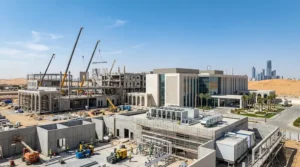
The right facade balances four factors: fire safety compliance, thermal performance, maintenance access, and capital cost. A system that looks identical on a rendering can perform very differently once it has faced a Riyadh summer for a few years, which is why facade selection should happen alongside the structural and MEP design, not after it.
Our team works through these trade-offs with clients early in the design phase as part of our design and build services in Jeddah, so the facade that gets approved is one that will actually perform over the building’s lifetime.