
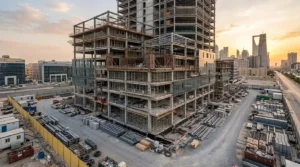


Global vs. Local Procurement for Construction in Saudi Arabia
Global procurement construction Saudi Arabia is one of the most discussed topics in the Kingdom’s booming construction industry today. With over $500 billion committed under Vision 2030, Saudi Arabia is building at a pace the world has never seen before. From NEOM to Red Sea Global, from King Salman International Airport to Diriyah, every mega-project demands a sharp procurement strategy. The question every project manager and contractor faces is simple: should you source materials and services from global markets or stick to local suppliers? This article breaks down the real costs, benefits, risks, and opportunities of both paths — and explains why a smart hybrid approach is the best procurement strategy construction teams can adopt in Saudi Arabia today.
Understanding Procurement in the Context of Saudi Arabia’s Construction Boom
Saudi Arabia’s construction sector was valued at approximately USD 70.33 billion in 2024. It is projected to reach USD 91.36 billion by 2029, growing at a CAGR of 5.37%. This extraordinary growth is powered by Vision 2030 — the Kingdom’s plan to diversify its economy away from oil dependence. The construction sector expanded by 4% in real terms in 2025, driven by housing, energy, and transport infrastructure sectors.
In this environment, procurement optimization Saudi becomes a core competitive skill. Procurement refers to the full process of sourcing, purchasing, delivering, and managing materials, equipment, and services needed for construction. Whether you are building a luxury hotel in Amaala or a residential community in Riyadh, your procurement decisions directly shape your project budget, timeline, and quality.
Every project manager must decide between two main approaches: international procurement KSA, which means sourcing from global suppliers, and local sourcing construction Saudi Arabia, which means buying from domestic manufacturers and vendors.
What Is Global Procurement in Construction?
Global procurement construction Saudi Arabia refers to the practice of sourcing materials, equipment, and specialist services from international suppliers. This could mean importing structural steel from China, specialty glass from Europe, or advanced HVAC systems from the United States. International procurement KSA has been widely used on major giga-projects because it provides access to technologies and products not yet manufactured locally.
Benefits of International Procurement KSA
- Access to Specialized Technology: Many cutting-edge materials and systems are not yet produced locally. Projects like NEOM require robotics, advanced glazing, and smart-city infrastructure that only global suppliers can currently provide.
- Competitive Pricing at Scale: For very large orders, global manufacturers can sometimes offer lower unit costs than local options. Import materials construction KSA from high-volume factories can reduce per-unit prices.
- Wider Supplier Choice: Global procurement gives contractors hundreds of vendor options, creating healthy competition and quality benchmarking.
- Innovation and Quality Standards: International suppliers often meet ISO, CE, and other global quality benchmarks. This is important for hospitality and luxury projects targeting international guests.
Challenges of International Procurement KSA
- Customs Duties and Tariffs: Saudi Arabia applies the GCC common external tariff of at least 5% on most non-GCC imports. Certain electrical and construction components now carry duties as high as 25% after recent tariff increases. This directly raises import materials construction KSA costs.
- Long Lead Times: Loose FF&E items take up to 25 weeks. Fire-related glazed partitions need 20 weeks. Electrical equipment requires 18 weeks. These delays can hold up entire construction sequences.
- Customs Clearance Risks: Saudi Arabia’s SASO Saleem/Saber conformity process is complex. Errors in paperwork cause unnecessary delays and extra charges. The sheer volume of materials entering KSA increases the risk of bottlenecks at ports.
- Global Supply Chain Volatility: In 2025, US tariff policies disrupted global trade routes. Geopolitical tensions affected 74% of middle-market executives’ supply chains. Construction projects relying entirely on import materials construction KSA face serious risk.
- Currency and Price Fluctuation: Global commodity prices remain about 30% higher than pre-pandemic levels, despite a projected 5% decline for 2025. Price hedging becomes complex when buying from multiple international sources.
- Compliance Documentation: Every product imported into Saudi Arabia must comply with SASO standards. Missing or incorrect documentation causes delays that directly impact project timelines.
What Is Local Sourcing in Saudi Construction?
Local sourcing construction Saudi Arabia means purchasing materials, labor, and services from domestic suppliers and manufacturers within the Kingdom. Saudi Arabia produces cement, rebar, concrete blocks, aggregates, and a growing range of building products. Cement prices hit a 16-year high in 2024, yet local sourcing still offers significant advantages in terms of speed, compliance, and cost predictability.
Benefits of Local Sourcing Construction Saudi Arabia
- Shorter Delivery Times: Local suppliers can deliver within days or weeks. This aligns with tight construction schedules and reduces the risk of idle teams waiting on materials.
- No Customs Barriers: Materials from local suppliers carry no import tariffs. There is no need for conformity certification or port clearance. Procurement optimization Saudi teams know this reduces hidden costs.
- Vision 2030 Compliance: The Local Content and Government Procurement Authority (LCGPA) requires a minimum local content threshold of 40% for public tenders. Prioritizing local sourcing construction Saudi Arabia helps contractors stay compliant and win more bids.
- Support for National Economy: Vision 2030 specifically focuses on stimulating the local economy through strategic procurement. Local sourcing creates jobs, builds domestic capability, and reduces the trade deficit.
- Lower Logistics Costs: No sea freight, no port fees, no cargo service fees. Local deliveries are simpler, cheaper, and more predictable. This directly supports procurement optimization Saudi goals.
- Better Supplier Relationships: Local suppliers understand Saudi building codes, climate conditions, and project expectations. Communication is easier and faster when resolving quality or delivery issues.
- Sustainability Gains: The Saudi Green Building Code (SBC 601:2023) requires recycled content and low-emission materials. Locally sourced materials often have smaller carbon footprints. Saudi Arabia leads the Arab world with 2,000 green construction projects.
Challenges of Local Sourcing Construction Saudi Arabia
- Limited Product Range: Saudi Arabia still cannot produce every material needed for complex projects. Specialty MEP systems, advanced finishes, and smart-city technologies often require import materials construction KSA.
- Capacity Constraints: The volume of giga-projects has strained local supply chains significantly. Turner & Townsend’s KSA Market Intelligence 2025 confirms supply chain instability and moderate delays are expected to continue throughout 2025.
- Skilled Labor Gap: Despite improvements, Saudi Arabia faces shortages of skilled trades. Demand is especially high for MEP mechanics, electricians, solar installers, and finishing trades. This affects locally delivered services too.
- Price Volatility: Local cement and steel prices fluctuate with demand. Cement prices reaching a 16-year high shows that local sourcing construction Saudi Arabia is not always the cheaper option when demand surges.
Cost-Benefit Comparison: Global vs. Local Procurement for Construction in Saudi Arabia
When doing a real procurement optimization Saudi analysis, cost is only one part of the picture. Time, risk, compliance, and sustainability must all be factored in. Here is a structured comparison for global procurement construction Saudi Arabia versus local sourcing:
Cost Factors
International procurement KSA brings lower unit prices on some bulk materials from high-volume global factories. However, you must add 5–25% customs duties, port fees, cargo service fees, import inspection taxes, and conformity certification costs. You also bear the financial risk of price changes during long lead times. Local sourcing construction Saudi Arabia avoids all these extra charges. For standard materials, local purchasing is often the more cost-effective choice once all hidden charges are included.
Time Factors
Import materials construction KSA introduces long lead times. Electrical equipment needs 18 weeks. FF&E needs up to 25 weeks. Customs clearance adds further unpredictability. For local materials like concrete, rebar, and blocks, delivery can happen within days. For projects under tight schedules — like those preparing for FIFA World Cup 2034 — local sourcing construction Saudi Arabia gives a clear time advantage.
Risk Factors
Global procurement construction Saudi Arabia carries supply chain risk, currency risk, geopolitical risk, and compliance risk. In 2025, global trade disruption is real. US tariffs have sent shockwaves through construction supply chains worldwide. Local sourcing reduces these external risks. However, domestic supply constraints and price volatility introduce their own local risks. Best procurement strategy construction teams diversify their risk across both channels.
Quality Factors
For specialist and luxury construction, international procurement KSA may offer superior product quality and innovation. Global brands carry established quality track records. However, international quality does not always mean better suitability for Saudi conditions. Local suppliers understand the local climate, seismic conditions, and building codes in ways that global vendors may not.
Compliance Factors
Local sourcing construction Saudi Arabia automatically aligns with LCGPA’s 40% local content requirements for public contracts. It also supports In-Kingdom Total Value Add (IKTVA) targets. International procurement KSA must be managed carefully to stay within compliance thresholds. For government-funded projects, falling below local content targets can disqualify a tender or trigger financial penalties.
The Smart Answer: A Hybrid Procurement Approach
The best procurement strategy construction teams use in Saudi Arabia is not purely global or purely local. It is a hybrid model that draws the best from both worlds. This is exactly the approach that procurement optimization Saudi experts recommend for 2025 and beyond.
A hybrid strategy means using local sourcing construction Saudi Arabia for standard, high-volume materials — concrete, aggregates, rebar, blocks, basic MEP components — where speed, cost, and compliance align. At the same time, it means using international procurement KSA for specialist equipment, advanced technologies, and luxury finishes where local supply simply does not yet exist.
OCCA’s research on FF&E procurement confirms this direction. The recommended best practice is a hybrid sourcing model that fuses local market knowledge with global brands and innovation. This blended approach delivers projects that are internationally competitive and uniquely aligned with Saudi culture and regulation.
How to Build Your Hybrid Procurement Strategy
Here are the key steps to building a best procurement strategy construction teams can trust in Saudi Arabia:
- Conduct a Full Bill of Quantities Review: Identify every material and separate it into standard items and specialty items. This is the foundation of any good procurement optimization Saudi plan.
- Map Local Supplier Capabilities: Research what the local market can provide at the required quality. The Saudi supplier ecosystem is growing fast. Many materials that were only available through import materials construction KSA five years ago are now produced locally.
- Plan for Long-Lead Imports Early: For items that must be sourced through international procurement KSA, place orders early. Proactive customs planning significantly reduces border clearance delays.
- Build Local Content Into Every Bid: Always account for the LCGPA’s 40% local content requirement from day one. This makes local sourcing construction Saudi Arabia not just a preference but a compliance necessity.
- Use Digital Procurement Platforms: The Saudi government is targeting 90% digital procurement by 2026 through the Etimad platform. Using ERP and digital sourcing tools improves supplier visibility and reduces manual errors that delay customs clearance.
- Diversify Suppliers: Do not rely on a single global vendor for critical imports. Diversifying international procurement KSA sources reduces the impact of any single supply disruption.
- Monitor Global Tariff Changes: Tariffs are changing constantly. Build tariff monitoring into your procurement optimization Saudi process to avoid surprise cost increases during the project lifecycle.
How Vision 2030 Is Reshaping Procurement Strategy in Saudi Arabia
Vision 2030 is transforming procurement optimization Saudi practices from a purely commercial function into a strategic national tool. A core focus of Saudi Arabia’s Vision 2030 is stimulating the local economy through strategic procurement that supports businesses, creates job opportunities, and upskills the workforce, thereby ensuring both high-quality sourcing and economic stability.
The LCGPA requires a minimum local content threshold of 40% for public tenders, encouraging the participation of local businesses while fostering international partnerships. This is a direct mandate that makes local sourcing construction Saudi Arabia a legal requirement for most government contracts, not just a preference.
The “Made in Saudi” initiative further incentivizes contractors to prefer locally manufactured goods. Procurement teams must be familiar with these policies. They must align their best procurement strategy construction plans with government programs that prioritize local content.
At the same time, Vision 2030 projects are so technically ambitious that global procurement construction Saudi Arabia remains essential for specialist products. NEOM’s robotics partnership with Samsung, the luxury finishes at Red Sea Global resorts, and the smart infrastructure at King Salman International Airport all require import materials construction KSA at scale.
This reality confirms that the winning approach is always a well-managed hybrid — maximizing local sourcing construction Saudi Arabia where possible, and managing international procurement KSA with precision where necessary.
Real-World Application: What Top Projects Are Doing
The Riyadh Metro — a USD 25 billion project that opened in 2024 — embedded green benchmarks like LEED Gold stations and 20% recycled materials. This required procurement optimization Saudi teams to balance local concrete and structural materials with imported transit systems and signaling technology. The project encouraged contractors to refine sustainable procurement strategies that blended both sourcing channels.
NEOM’s Sindalah and The Line have established that only prequalified international suppliers meeting global standards are invited for specialist works. This sets the bar for global procurement construction Saudi Arabia in giga-projects. Yet even NEOM uses local aggregates, cement, and labor for foundational civil works.
Red Sea Global’s luxury hospitality projects demonstrate the hybrid model clearly. Cultural craftsmanship and locally sourced stone and wood reflect Saudi identity. International FF&E brands meet the expectations of a global luxury audience. This split is the best procurement strategy construction teams can follow for similar hospitality developments.
Key Metrics to Track in Your Procurement Strategy
Any solid procurement optimization Saudi plan must track the right numbers. Here are the critical metrics for global procurement construction Saudi Arabia versus local sourcing:
- Lead Time per Material Category: Track import lead times versus local delivery times. Aim to reduce average lead time across your supply chain.
- Total Landed Cost: For every imported item, calculate unit cost plus customs duty plus freight plus port fees plus conformity costs. Compare this to the local sourcing construction Saudi Arabia equivalent price.
- Local Content Percentage: Track your running local content score throughout the project. Stay above 40% to remain compliant with public tender rules.
- Supplier Performance Score: Rate both local and international suppliers on delivery accuracy, quality, and responsiveness. Use this data to build your approved vendor list for future projects.
- Cost Variance: Monitor how actual procurement costs compare to your budget. Global price volatility is real in 2025. Early variance detection protects your project margin.
The Role of Technology in Procurement Optimization Saudi Arabia
Digital transformation is reshaping how teams manage both local sourcing construction Saudi Arabia and international procurement KSA. The Saudi government’s Etimad platform has centralized government procurement digitally. By 2026, over 90% of government procurement is being conducted through digital channels.
ERP systems allow construction companies to track purchase orders, monitor supplier performance, and manage customs documentation in real time. AI-powered analytics can forecast price changes and flag supply risks before they become costly problems. For global procurement construction Saudi Arabia, digital tools reduce the administrative errors that cause customs delays. For local sourcing, they give real-time inventory visibility across multiple project sites.
Blockchain is emerging as a transparency tool for supply chain verification. This is particularly valuable for import materials construction KSA where provenance, quality certificates, and delivery tracking are critical. Teams that invest in digital procurement platforms will have a structural advantage in Saudi Arabia’s rapidly evolving construction market.
Common Mistakes to Avoid in Saudi Construction Procurement
Even experienced procurement teams make costly errors. Here are the most common pitfalls to avoid in both global procurement construction Saudi Arabia and local sourcing:
- Awarding to the Lowest Bidder Without Vetting: Research from the Wiley Advances in Civil Engineering 2025 study confirms that awarding to the lowest bidder in Saudi construction frequently results in poor project performance. Evaluate capability, track record, and financial stability — not just price.
- Ignoring Customs Documentation Requirements: Incomplete SASO Saber paperwork is one of the most common causes of import materials construction KSA delays. Use an authorized certification body to avoid unnecessary charges.
- Underestimating Long Lead Times: Ordering specialty imports too late is a leading cause of construction delays. Factor full lead times — including manufacturing, shipping, port clearance, and delivery — into your procurement optimization Saudi schedule from day one.
- Failing to Build Local Content Early: Contractors who wait until project end to calculate their local content score often find they must make rushed purchases from local suppliers. Plan local sourcing construction Saudi Arabia from the start.
- Using a Single-Source Strategy: Dependence on one global vendor for a critical material is high risk in today’s volatile trade environment. Diversify your international procurement KSA suppliers for every critical item category.
Conclusion: The Right Procurement Strategy Makes or Breaks Saudi Construction Projects
Global procurement construction Saudi Arabia and local sourcing construction Saudi Arabia are not competing strategies — they are complementary tools that must be used together with precision. The Kingdom’s construction market is growing at a pace that demands both global innovation and local efficiency. In 2025, with construction inflation between 3.4% and 4.2%, supply chain volatility, and strict Vision 2030 compliance requirements, there is no room for a one-dimensional procurement approach.
The best procurement strategy construction teams can adopt is a structured hybrid model. Use local sourcing construction Saudi Arabia for speed, compliance, and cost predictability on standard materials. Use international procurement KSA for specialty technology, luxury products, and items unavailable domestically. Track total landed costs, lead times, and local content percentages on every project. Stay current on customs duty changes that affect import materials construction KSA costs. And invest in digital tools that give you real-time visibility across your entire supply chain.
Procurement optimization Saudi is not a one-time decision. It is a continuous strategic process. Projects that win in Saudi Arabia’s booming construction market are those that master the balance between global capability and local execution — building smarter, faster, and more compliantly than the competition. Global procurement construction Saudi Arabia done right is a powerful competitive advantage when paired with a deep commitment to local sourcing.